Hey there, fellow electrical folks—if you’ve ever worked with grid power, you know it’s not just about getting electricity to flow. It’s about making sure that power is clean, stable, and doesn’t mess up all the expensive gear you’ve invested in. That’s where pad mounted substations (let’s just call them PMS for short, ‘cause we’re all busy) come in. As someone who’s been supplying these bad boys for years, I’ve talked to more facility managers, electricians, and grid engineers than I can count about one recurring question: What’s the deal with power quality when it comes to pad mounted substations? Pad Mounted Substation

Let’s cut to the chase—PMS aren’t just those compact, boxy units you see on the side of streets or in parking lots. They’re mini power hubs, housing transformers, switches, breakers, and all the goodies that step down high-voltage grid power to something your office, factory, or apartment complex can actually use. But with great power (and compactness) comes… well, some power quality side effects. The good news? Most of these aren’t dealbreakers—if you know what you’re dealing with, you can handle ‘em.
First off, let’s start with the basics: what causes power quality issues in the first place? Think of it like driving a car—potholes, speed bumps, and heavy traffic can make your ride bumpy. For electricity, those “bumps” are things like voltage sags, swells, harmonics, power factor lag, and even transient surges. And because PMS are often placed right where the power is needed (not miles away at a big substation), they’re closer to the loads that cause these issues. That’s a key point I learned early on—people assume the big grid substations are the only culprits, but PMS are the frontline for how power gets delivered to end-users.
Let’s break down each impact, and how we as PMS suppliers work to fix ‘em, ‘cause that’s what you care about, right? No one wants to end up with fried servers or flickering LED lights ‘cause their substation cut corners.
Harmonics—The Hidden Power Thieves
Harmonics are probably the most talked-about (and most annoying) power quality issue with PMS. What are they? Basically, they’re extra frequencies of electricity that get added to the “clean” 50Hz or 60Hz sine wave you’re supposed to get. Where do they come from? Most of the time, from non-linear loads—think variable frequency drives (VFDs) on factory motors, LED lights, computer servers, even those energy-efficient HVAC systems everyone loves. These loads don’t use power in a smooth, constant way; they chop it up, creating those extra frequencies that mess things up.
Now, why are PMS worse for harmonics than other substation types? Because PMS often serve small-to-medium loads (like a strip mall or a 100-unit apartment building) that have a bunch of these non-linear gadgets all clustered together. If the PMS transformer doesn’t have the right design, those harmonics can circulate right through the unit, overheating the transformer windings, messing up the neutral wire, and even causing circuit breakers to trip unnecessarily. I’ve had a client tell me their office servers kept crashing every Monday morning—turns out their old PMS didn’t have harmonic mitigation, and the staff were all turning on their 10 new PCs at once. Total nightmare.
Here’s what we do at our shop to fix this: we spec PMS with either K-factor transformers or built-in harmonic filters. K-factor transformers are basically built to handle extra heat from harmonics—they have thicker windings and better cooling, so they don’t overheat even when harmonics are flying around. Harmonic filters are another go-to; they act like a sieve, catching those extra frequencies before they can move further down the line. Last year, we installed a PMS with harmonic filters for a medical clinic, and they haven’t had a single server crash since—score.
Voltage Sags and Swells—The Daily Bumps in the Grid
Voltage sags are when the power drops below its normal level (usually 90% of nominal), and swells are when it goes above (more than 110%). Both are super common with PMS, especially during peak usage times. Think about a summer afternoon—everyone’s running their AC, so a factory turns on a big VFD for its assembly line, or an apartment complex cranks up all its fans. That sudden jump in load causes a sag right at the PMS, because it’s so close to the loads. If the sag is long enough, it can make motors slow down, lights dim, or even shut down sensitive gear like PLCs in factories.
Swells are a bit less common but still a pain—they usually happen when a big load shuts off suddenly, like a crane turning off, or a grid line switching over during maintenance. The power surges a little, which can damage electronics over time, even if it’s not enough to blow a fuse right away.
Wait, but how do PMS factor into this? Unlike outdoor substations that have long power lines to buffer the load changes, PMS are right there with the loads. So the voltage changes hit the end-user faster and harder. But here’s the thing—we can design PMS to include voltage regulation features. Some of our units have on-load tap changers (OLTCs), which automatically adjust the transformer’s winding ratio to keep voltage within a tight range. For example, if the grid dips to 110V when it should be 120V, the OLTC kicks in and steps it back up to 120V in a matter of milliseconds. We also add surge arresters to PMS to handle those swells—they act like a pressure release valve, diverting excess voltage to ground before it gets to your gear. I had a restaurant client a while back who was losing $500 a day every time a voltage sag hit during dinner rush. We swapped their old PMS for one with an OLTC, and they haven’t had that problem since. Worth every penny.
Power Factor Lag—Wasting Money (And Power)
Power factor is a measure of how effectively electricity is being used. A perfect power factor is 1.0, meaning all the power is being used for useful work. A lagging power factor (below 0.95 is usually considered bad) means some power is being wasted as reactive power—power that doesn’t do work, just heats up wires and transformers. Why does this matter for PMS? Because if the power factor is low, the utility company might charge you extra (hello, demand charges!) and the PMS transformer has to work harder to deliver the same amount of real power.
What causes lagging power factor in a PMS? Usually inductive loads—motors, transformers, heaters, all that stuff that uses magnetic fields to work. Those create that reactive power drag. The good news is, this is one of the easiest power quality issues to fix. Most of our PMS now come pre-installed with power factor correction (PFC) capacitors. These capacitors offset the reactive power from the inductive loads, bringing the power factor up to 0.95 or higher. We had a small manufacturing plant that was paying $2,000 a month in demand charges ‘cause of their bad power factor. After we installed a PMS with integrated PFC, their demand charges dropped by 70%—that’s like an extra part-time employee’s salary every month, just from fixing the substation.
Transient Surges—The Sneaky Nighttime Attacker
Transient surges are those short, sharp spikes in voltage—think lightning strikes, or when a big piece of equipment turns on or off. They only last a few microseconds, but they’re enough to damage the microchips in your computers, phones, or PLCs over time. Now, you might think, “That’s what surge protectors are for, right?” And yeah, but the surge protectors at the end of the line can only do so much. If a big lightning strike hits near the PMS, the surge can get through the transformer and fry your gear before your outlet protector even kicks in.
That’s why every PMS we build has primary surge arresters on the grid side and secondary arresters on the load side. We size them specifically for the PMS’s voltage rating and the loads it’s serving, so they can handle even the biggest surges without breaking a sweat. Last year, a thunderstorm took out a nearby old substation, but the PMS we installed for a data center kept running—no server damage, no downtime. That’s the kind of peace of mind we’re all about.
Wait, but let’s be real—no PMS is perfect, and there are times when power quality issues are out of our control. For example, if the grid itself has harmonics from upstream generators, that can still make its way to the PMS. But here’s the thing: as a PMS supplier, our job isn’t just to sell a box—its to design a unit that mitigates the most common power quality issues right at the source, before they get to you. We work with our clients to do a power quality audit first, too. Like, if you run a factory with a bunch of VFDs, we’ll spec a K-factor transformer and harmonic filters. If you’re a small office, we’ll add just enough PFC and surge protection to keep costs down but still keep your gear safe.
A lot of people ask me, “Why not just use a bigger substation?” Well, PMS are way more flexible—they can be placed almost anywhere, they’re cheaper to install, and they take up way less space. But that compactness is why power quality is such a big part of designing them. You can’t just throw together a transformer and switches and call it a day; you have to think about how all those components interact with each other and the loads they’re serving.
I’ve been in this game for 12 years now, and the biggest mistake I see people make is ignoring power quality when they’re buying a PMS. They look at the upfront cost and go, “That’s cheaper, so let’s go with it.” But then they end up paying thousands in downtime, repairs, or utility fees down the line. Our approach is different—we prioritize power quality as much as functionality. Every PMS we leave on a job site is tested for harmonics, voltage regulation, and power factor before it ships. We also provide ongoing support, ‘cause power quality isn’t a “set it and forget it” thing—loads change, so your PMS might need tweaks every few years.
So if you’re in the market for a pad mounted substation, don’t just ask about size or voltage rating. Ask about how they handle harmonics, voltage sags, power factor, and transients. That’s the stuff that will save you headaches (and money) in the long run.
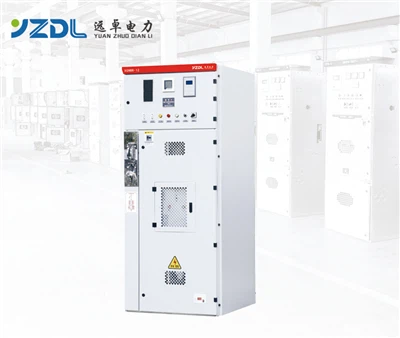
If you’re ready to talk through your specific needs—whether you’re a facility manager, electrician, or project engineer—we’re here to help. We can do a quick power quality assessment, walk you through different PMS options, and make sure you get a unit that keeps your power clean, stable, and reliable. Don’t let a bad substation ruin your operations—reach out, and let’s make this work for you.
Cable Distribution Box References
- IEEE Std 519-2014, IEEE Recommended Practice and Requirements for Harmonic Control in Electric Power Systems
- NEMA Standard SG6-2018, Pad-Mounted Substations for Alternating Current Systems
- Electrical Construction Maintenance (EC&M) Magazine, “Harmonics in Pad-Mounted Substations: Causes and Mitigation”, 2022
- U.S. Department of Energy, “Power Quality Basics: Voltage Sags, Swells, and Surges”, 2021
Yuanzhuo Electrical Equipment (Jiangsu) Co., Ltd.
We’re well-known as one of the leading pad mounted substation manufacturers and suppliers in China. We warmly welcome you to wholesale high quality pad mounted substation at competitive price from our factory. If you have any enquiry about cooperation, please feel free to email us.
Address: Group 8, Chengdong Village, Fucheng Sub-district Office, Funing County
E-mail: markcheng1358@126.com
WebSite: https://www.yzdlchina.com/
