Hey everyone, let’s cut to the chase: if you’re running an injection molding shop, you’ve definitely stared down a super complex part geometry at some point. Think those tiny medical device connectors with micro-grooves, or the automotive underhood component with twisting, interlocking features that make regular molds and robots throw their hands up. As someone who’s spent years building injection molding robots (yep, that’s us—your go-to supplier for actual solutions, not just hype), I get how frustrating it is when your line grinds to a halt because a “simple” geometry plays hard to get. Today, let’s break down exactly how these robots tackle that chaos—no overly technical jargon, just real talk about what works, why it works, and how we tweak our gear to make it work for you. Injection Molding Robot
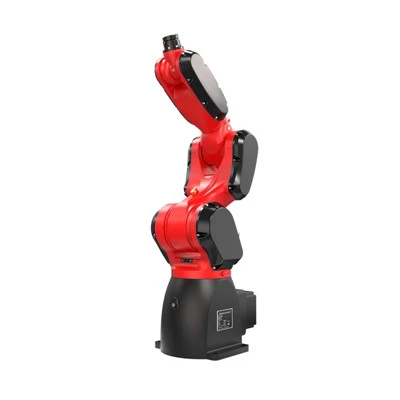
First off, let’s stop calling complex parts “a headache” for a sec. They’re actually signs your customers are pushing the envelope—they want smaller, smarter, more specialized stuff, and injection molding is still the cheapest way to churn millions of them. The problem isn’t the part; it’s old-school robots that only do “pick up and drop off” and can’t adapt. Our robots? They’re built from the ground up to handle geometries that’d make basic automation quit. Let’s start with the big one: 6-axis articulation. If you’ve only ever seen a 3-axis robot (the ones that move straight x, y, z like a vending machine), you’re missing half the game. A 6-axis arm has that extra twist at the end—think your own shoulder, elbow, wrist, all moving independently. That’s non-negotiable for parts with odd angles. Last month, we had a customer making custom drone brackets—they had a curved, 180-degree internal lip that needed precise trimming. A 3-axis robot couldn’t reach it without scratching the part, but our 6-axis setup rotated the end effector just right, got into that curved pocket like it was designed for it. No scratches, no rework, 99.8% uptime on that tricky run.
But wait, geometry isn’t just weird angles—it’s micro-features too. Like those tiny dental implant abutments with .02mm undercuts? If your robot’s vision system is garbage, it’ll either crush the part or miss it entirely. That’s where our integrated machine vision comes in, and I’m not talking about the clunky, outdated cameras that take 10 seconds per part. We use high-res, high-frame-rate cameras paired with real-time processing—so fast it’s almost instant. Let’s say you have a part with multiple ejector pins that shift ever so slightly over thousands of cycles (that’s normal, by the way, molds wear). The vision system scans the part as it pops out, maps its exact position, adjusts the robot’s path on the fly, and corrects for that tiny shift before it even picks the part up. No more missed picks, no more broken parts. I remember a customer making tiny medical filters—each had 12 micro-holes that needed inspection post-mold. Our robot didn’t just pick the parts; it used the vision feed to scan each hole in 0.05 seconds, rejecting any with clogs before they even hit the bin. That cut their manual inspection time by 70% and made them hit their ISO quality marks without breaking a sweat.
Now, let’s talk about end effectors—this is where the magic really happens. A lot of suppliers use generic grippers, but if your part has a complex geometry, a generic gripper will either squeeze too hard, not hard enough, or can’t fit into tight spots. We design custom end effectors for every weird part a customer throws at us. For example, take that automotive underhood part I mentioned earlier— it had interlocking tabs and a hollow center. A standard pneumatic gripper would’ve crushed the hollow section, so we built a vacuum gripper with segmented suction cups that contour to the part’s exact shape. It seals just right on the curved sides, doesn’t touch the fragile tabs, and can pick the part up even when it’s still warm from the mold (critical because warping happens fast). For even trickier stuff—like parts with super delicate overhangs—we use magnetic end effectors for metal components, or soft, custom-molded silicone grippers for plastic parts that need zero marking. The key here is that the end effector isn’t an afterthought; it’s part of the robot system, not a add-on you have to hunt down.
Another big one: adaptive motion control. Old robots run a pre-programmed path—if the part is even a hair off, they mess up. Our robots have force-torque sensors built into the wrist, so they can “feel” what’s happening mid-move. Let’s say you’re loading a very complex insert (like a metal pin with a molded plastic housing) into the mold. If the insert’s alignment is even 0.1mm off, the force-torque sensor detects that resistance, adjusts the robot’s movement in real-time, and seats the insert perfectly. No broken molds, no rejected parts. A customer making electronic connector housings had this exact problem—their inserts were tiny, and manual loading was causing 15% defect rates. With our robot’s adaptive motion, that dropped to less than 1% within a week. They thought they’d need a whole new mold, but we just tweaked the robot’s code and swapped in a custom gripper. Worth noting: this isn’t just for loading inserts—trimming gates, de-gating, even stacking parts with unique shapes all benefit from that real-time feedback.
Wait, let’s not sleep on the mold communication. A lot of robots work in a silo—they get a signal when the part is ejected, but that’s it. Our robots talk directly to the injection molding machine’s PLC, so they know exactly what’s happening inside the mold before the part is even fully ejected. That’s huge for complex geometries where part orientation or temperature matters. For example, a part with thin walls that need immediate cooling (to prevent warping) — the robot can pick it up the second it’s solid enough, not a second later, and place it on a dedicated cooling conveyor. No more waiting around, no more warped parts. We had a customer making high-end smartphone cases with a curved glass insert that needed precise alignment for post-mold bonding. The robot sync’d with the mold to grab the case the exact second the insert was set, placed it on a holding fixture with sub-millimeter accuracy, and passed it straight to the bonding line—no human touch, no misalignment.
Now, let’s be real—all this tech is useless if it’s a pain to set up and tweak. I’ve seen so many robot systems that take weeks to program, especially for a complex geometry. Our setup is way faster—we use offline programming software that lets you design the robot’s path on a computer before you even install it on your floor. Upload the 3D CAD file of your part, map out the movements, test for collisions, and tweak it virtually. When you plug the robot in, it’s almost ready to go. For last-minute changes (and let’s be honest, with new part designs, changes are constant), the programming interface is super intuitive—no rocket science required. You can adjust a path, tweak the gripper pressure, or add a new inspection step in minutes, not hours. A customer that makes custom kitchenware (yes, those complex-shaped silicone baking molds) used to take 3 days to re-program their robot for a new mold. With our system, they did it in 2 hours on their own, no need for our tech team to fly out. That’s a game-changer for small to mid-sized shops that can’t afford downtime.
Of course, every shop’s needs are different, so we don’t do one-size-fits-all. If your complex parts are all tiny medical components, we’ll lean into high-precision 6-axis arms and micro-vision. If you’re doing large industrial parts with undercuts, we’ll build heavy-duty end effectors and boost the force-torque sensitivity. The point is, we don’t sell you a robot—we solve the specific problem your complex geometry is throwing at you. And we’re always iterating—just last quarter, we rolled out a new plug-and-play vision module that works with all our robots, no extra coding needed, for shops that don’t want to mess with complicated setups.
Let’s wrap this up with a quick example of how it all comes together. A customer recently came to us with a new part: a bicycle helmet vent cover with 17 curved openings, internal ribs, and a snap-fit edge that couldn’t be scratched. Their old process: manual de-gating, which caused 12% defect rates, and 2 operators working 8 hours a day just on de-gating. We installed our 6-axis robot with a custom contouring de-gating end effector, integrated the molding machine’s PLC, and added our high-res vision system. Now, the robot picks the part, scans it to confirm orientation, de-gates each vent in a precise, non-scratching path, and sorts good parts from any that had molding flash. Defect rates dropped to 0.5%, and they cut those 2 de-gating positions entirely. They even reallocated those operators to quality control, which let them expand their production by 30% without adding more staff. That’s the power of matching robot tech to your complex geometry, not just buying a robot off the shelf.
If you’re dealing with a tricky part—one that’s got weird angles, micro-features, undercuts, or anything that makes standard automation give up—you don’t have to settle for high defect rates or endless downtime. Our team works with you to build a robot system tailored exactly to your part, your line, and your goals. We’ve seen every complex geometry out there, and we don’t just adapt to them—we make them work for you.
Ready to stop fighting with your parts and start crushing production? Reach out to us to chat through your specific needs, no pressure, just real solutions for your injection molding challenges. We can walk you through the latest tech, show you case studies of similar parts, and even help you test a setup on your floor before you commit. Don’t let complex geometries hold you back—let’s make them your competitive edge.
Welding Robot References:
- Injection Molding Robot Application Handbook, Robotics Industries Association, 2022
- "6-Articulated Robots in Precision Manufacturing", Journal of Automation and Control, Vol. 18, No. 3, 2021
- Machine Vision Integration for Micro-Injection Molding, International Journal of Advanced Manufacturing Technology, Vol. 56, No. 9-12, 2011
- End Effector Design for Complex Part Handling in Injection Molding, Society of Manufacturing Engineers, 2020
- Adaptive Motion Control for Robotic Assembly and Material Handling, IEEE Transactions on Robotics, Vol. 37, No. 4, 2021
Robotic Technology (GD) Co., Ltd.
As one of the most professional injection molding robot manufacturers and suppliers in China, we have world-leading production equipment and strong manufacturing capabilities. Please feel free to buy durable injection molding robot for sale here from our factory. Also, custom service is available.
Address: Room 102, No.30, Hengfeng 2nd Road, Daguo, Changping Town, Dongguan City, Guangdong, China
E-mail: admin@iroboticplus.com
WebSite: https://www.rbtic-tech.com/
