If you’re in the market for parallel shaft gearboxes—whether you’re a plant manager, industrial equipment designer, or maintenance lead—you already know these workhorses of mechanical power transmission don’t operate in a vacuum. As a supplier who’s spent the last 12 years serving factories in automotive, agriculture, material handling, and packaging sectors, I’ve learned that even the highest-quality parallel shaft gearboxes deliver only a fraction of their potential if paired with the wrong accessories. Over the years, I’ve seen far too many clients cut corners on add-ons only to face premature wear, unplanned downtime, and inflated long-term repair costs. That’s why I want to break down the most common, non-negotiable accessories for parallel shaft gearboxes, explain what each does, and why they matter as much as the gearbox itself. Parallel Shaft Gearboxes

First, let’s ground this in what a parallel shaft gearbox is, just to set the stage. Unlike coaxial gearboxes where input and output shafts line up, parallel shaft gearboxes have two shafts side by side, making them ideal for applications that require speed reduction, torque multiplication, or power transfer between adjacent machinery. Their design means they handle higher torques than many compact alternatives, but that robustness comes with a need for components that protect, align, and connect them to the rest of your system.
Let’s start with the most foundational accessory: shaft seals. If your gearbox is the heart of your power system, shaft seals are its first line of defense. Parallel shaft gearboxes use rotating shafts to transfer power, and any gap between the shaft and the gearbox housing is a vulnerability. What do these seals do? They prevent two critical contaminants from entering the gearbox’s internal components: moisture, dust, and industrial particulates (think metal shavings from a machining line, grain dust in an agricultural facility, or oil mist from a nearby pump) on one side, and lubricant from leaking out on the other.
Not all shaft seals are created equal, either. The most common type for parallel shaft gearboxes is the lip seal, which features a flexible rubber (usually nitrile or Viton) lip that presses against the shaft to create a tight barrier. For harsh operating conditions—like extreme heat in a steel mill or exposure to chemicals in a chemical processing plant—Viton seals are non-negotiable, as they resist degradation far better than standard nitrile. I once had a client in a food processing plant skip upgrading their Viton seals to save $20 each, and within six months, grain dust had seeped through cheap nitrile seals, contaminated the gear oil, and caused a gear tooth crack that shut down their entire packaging line for three days. The cost of that downtime was 100 times more than the seals would have cost, so this is one accessory you never want to skimp on.
Next, oil level plugs, sight gauges, and drain plugs. These three accessories work together to keep your gearbox’s lubrication in check, and poor lubrication is the number one cause of parallel shaft gearbox failure—studies from the American Gear Manufacturers Association (AGMA) show that 34% of gearbox failures stem from inadequate or contaminated lubrication. The sight gauge is the simplest: a clear, reinforced plastic window mounted to the gearbox housing that lets you check oil level without opening the housing. It’s marked with minimum and maximum lines, so you can tell at a glance if you’re low on oil or overfilling it (both of which cause problems). Overfilling leads to excess heat from churning oil, while underfilling leaves gears unlubricated, leading to metal-on-metal wear.
Oil level plugs often work hand in hand with the sight gauge: they’re the threaded ports you use to add oil to the gearbox, and they usually have a vented design that prevents pressure buildup inside the housing (a common issue when the gearbox heats up during operation). Drain plugs, meanwhile, make regular oil changes easy. For smaller gearboxes, a simple threaded plug works, but for larger, high-torque units, some clients opt for magnetic drain plugs. These tiny magnets trap metal shavings that come from normal gear wear, so you can spot early signs of internal damage before it becomes a major problem. I always recommend magnetic drain plugs to new clients, because they turn a routine oil change into a quick diagnostic check—no extra tools or time required.
Then there’s motor adapters and input flanges. Parallel shaft gearboxes don’t come with a built-in motor, so you need a way to mount your electric, hydraulic, or combustion motor to the gearbox’s input shaft, and align them correctly. That’s where motor adapters and input flanges come in. A motor adapter is a custom or standardized bracket that connects the motor’s mounting face to the gearbox’s input housing, while the input flange is the precision-machined plate that fits between the two to ensure perfect shaft alignment. Misalignment between the motor and gearbox is a silent killer: even a tiny angular misalignment (just a few tenths of a millimeter) can cause excessive vibration, wear on the motor’s bearings, and stress on the gear teeth, cutting the gearbox’s lifespan by up to 50%.
I’ve seen this play out dozens of times. A client in a material handling plant once bought a cheap generic motor adapter for a 50 HP parallel shaft gearbox, and within a year, the gearbox’s input bearings were shot. When we inspected, the adapter was misaligned by almost 2 degrees, putting constant side load on the input shaft. The replacement cost would have been covered by buying a properly machined, ISO-standard input flange and adapter in the first place. That’s why as a supplier, we always make motor adapters and input flanges a core part of our gearbox packages, not an afterthought—especially for high-torque, continuous-duty applications.
Couplings are another non-negotiable accessory for parallel shaft gearboxes. While input flanges connect the motor and gearbox, couplings connect the gearbox’s output shaft to the driven load—whether that’s a conveyor belt, a mixer, a pump, or another piece of machinery. Couplings serve two key purposes: they transmit torque between two shafts while accommodating small misalignments (even with the best flanges, perfect alignment in a real factory is almost impossible), and they dampen vibration from the driven load, which protects both the gearbox and connected equipment.
There are several types of couplings that work well with parallel shaft gearboxes, and the right choice depends on your application. Jaw couplings, which use a rubber or polyurethane jaw to connect two metal hubs, are affordable and great for general-purpose use like conveyor systems. For high-torque, shock-heavy applications—like agricultural equipment that encounters sudden loads from tilling soil—grid couplings are ideal, as their metallic design handles extreme torque without deforming. For applications where backlash (the small amount of play between gears) is a problem—like packaging machinery that requires precise positioning—zero-backlash couplings, such as bellows or disc couplings, are the way to go. I often advise clients to match the coupling’s torque rating to both the gearbox’s output torque and the peak torque of their driven load, not just the average operating torque. Underrating the coupling is a common mistake, leading to coupling failure that takes out the gearbox and connected equipment too.
Now, let’s talk about mounting brackets and feet. Parallel shaft gearboxes come in two primary mounting configurations: foot-mounted (with two large metal feet on the bottom of the housing that bolt to a base plate) and flange-mounted (where the back of the gearbox housing has a flange that bolts directly to a machine surface). But even within these configurations, you may need additional mounting accessories to secure the gearbox properly. For example, if your application requires the gearbox to be mounted horizontally, vertically, or even at an angle, adjustable mounting brackets let you fine-tune its position to align with the input and output shafts. For heavy-duty applications where the gearbox is subject to torque reaction (the force that twists the gearbox housing when power is transferred), torque arms are essential. A torque arm connects the gearbox housing to a fixed structure, preventing it from rotating along with the shafts, which would loosen bolts, damage the housing, or cause misalignment.
I once had a client in a steel rolling mill who installed a 200 HP parallel shaft gearbox without a torque arm, thinking the foot mounting would be enough. After two weeks of operation, the gearbox had twisted 15 degrees, cracking the housing and bending the input shaft. The repair cost nearly $15,000, and the mill lost 12 hours of production. That’s the kind of avoidable loss that comes from skipping a relatively small accessory like a torque arm.
Last but not least, temperature and vibration sensors. While not every application needs these, they’re fast becoming standard for predictive maintenance, which is a huge cost-saver for industrial operations. Temperature sensors mounted to the gearbox housing track operating temperature—abnormal heat is a clear sign of insufficient lubrication, bearing wear, or misalignment before a failure occurs. Vibration sensors, meanwhile, pick up on irregular vibration patterns that indicate gear tooth wear, shaft imbalance, or loose components. Together, these sensors turn a reactive maintenance strategy into a proactive one, letting you schedule repairs during planned downtime instead of dealing with unplanned shutdowns that can cost thousands per hour.
Now, let’s get practical: when you’re ordering parallel shaft gearboxes, don’t treat accessories as an extra. As a supplier, I’ve found that clients who bundle the right accessories with their gearbox upfront save 30% on installation, repair, and long-term maintenance costs compared to those who buy accessories separately later. Let me give you a quick example: a 50 HP parallel shaft gearbox for a conveyor system. If you buy the gearbox alone, it’s $1,800. Add a quality lip shaft seal, sight gauge, magnetic drain plug, motor adapter, jaw coupling, and torque arm, and the total is $2,400. But the alternative is buying the gearbox for $1,800, then sourcing generic seals, a flimsy adapter, and a misaligned coupling for $700 down the line—plus paying for downtime and repairs when the cheap parts fail. That’s a $100 difference, but the long-term savings are enormous.
If you’re currently sourcing parallel shaft gearboxes and aren’t sure which accessories you need, or if you’ve dealt with gearbox failures caused by missing or incompatible accessories, I’m here to help. We’ve worked with hundreds of clients across industries to customize gearbox and accessory packages that fit their specific application, from low-speed agricultural conveyors to high-speed packaging lines. We test every accessory for compatibility with our gearboxes, so you don’t have to worry about mismatched parts leading to downtime.
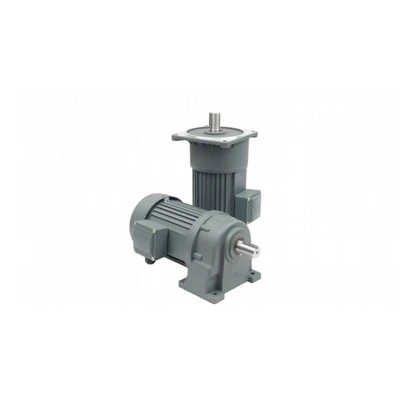
Whether you’re replacing a failing gearbox component or upgrading an entire power transmission system, the right accessories are what turn a standard gearbox into a reliable, long-lasting solution. Don’t leave your system’s performance to chance—let’s talk through your needs so you get the gearbox and accessories that work for your operations.
Helical Gear Motors References
- American Gear Manufacturers Association. (2022). Gearbox Failure Root Cause Analysis: Industry Trends and Best Practices.
- Shigley, J. E., Mischke, C. R., & Brown, T. H. (2004). Standard Handbook of Machine Design (3rd ed.). McGraw-Hill.
- International Organization for Standardization. (2019). ISO 9001:2015 for Power Transmission Components.
- Machinery Lubrication Magazine. (2021). Common Lubrication Mistakes and Their Impact on Gearbox Lifespan.
GuangDong Ruisico Transmission Technology Co., Ltd.
Guangdong Ruisico Transmission Technology Co., Ltd. is one of the most reliable parallel shaft gearboxes manufacturers and suppliers in China, also supports customized service. Welcome to buy durable parallel shaft gearboxes made in China here and get quotation from our factory. For price consultation, contact us.
Address: No. 70, Anjing Road, Shengfeng Community, Xiaolan Town, Zhongshan City
E-mail: info@risc-drive.com
WebSite: https://www.risc-motor.com/
