If you’ve ever walked into a car parts store, a construction supply shop, or even a medical equipment boutique and picked up a metal or plastic component that fit just right—chances are it went through casting part machining. For the last 12 years, I’ve owned and run a small, family-owned casting part machining shop, and honestly, I’ve lost count of how many times I’ve had people ask me if there’s actually any long-term upside to working in this line of work. A lot of folks outside of manufacturing see it as dead-end, dirty, or just for people who couldn’t get “real” office jobs. But let me tell you—those people have no clue how much this industry has shifted, or what kind of career prospects are actually out there for anyone who wants to get in, or stay, in casting part machining. Let’s break it down, no stuffy jargon, no corporate fluff, just real talk from someone who’s been in the thick of it. Casting Part Machining
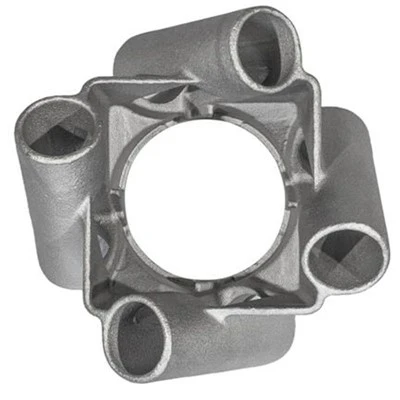
First off, let’s clear up what we actually do here, because that’s half the confusion. Casting part machining isn’t just melting metal and pouring it into a mold—though that’s a big part of it, especially for the foundational stuff. A lot of people mix up casting and machining, right? Casting is when you pour molten material (metal, plastic, even ceramic sometimes) into a shaped mold to get a rough, custom part. Machining is the finishing step—you take that rough cast, grind it, drill, mill, or CNC it to get the exact tight tolerances a part needs to work. Think of a brake caliper for a truck: it starts as a big, lumpy cast aluminum piece, then we machine the edges, drill the bolt holes, and polish the surface so it fits perfectly on the wheel. Without that machining, that cast part is just a hunk of metal that looks cool but does nothing.
Now, let’s get to the career prospects, because that’s what you’re here for. Let’s start with entry-level jobs, because that’s where most people start out. 10 years ago, entry-level casting part machining jobs were just “grind this, load that” kind of roles, paying barely above minimum wage with no benefits. Today? Not even close. Let’s talk about CNC operators first—those are the people running the big automated machines that do most of the precision work now. Shops like mine will pay a brand-new CNC operator with a high school diploma and a basic manufacturing certification (you can get that at most community colleges in 6 months, no 4-year degree required) $18 to $22 an hour, and that’s just starting. After 2 years, if you’re good, that jumps to $28 to $35 an hour, plus health insurance, 401(k) matches, and sometimes overtime. And it’s not just big companies—small shops like ours are begging for good CNC operators right now. We’ve had to turn down work multiple times because we can’t find enough people to run the machines. The talent shortage in this industry is real, and that’s a huge driver for good careers.
Then there’s the skilled trades side, which is way more dynamic than people think. Think of roles like set-up technicians—these are the people who program the CNC machines, adjust the molds, make sure every cast part is exactly to spec. That role doesn’t require a 4-year degree; a lot of people learn it through apprenticeships, where you get paid while you train, for 2 to 4 years. A set-up tech makes $35 to $50 an hour, and once you’re experienced, you can even move into supervisory roles. We have a set-up tech at our shop named Jake who started as an entry-level operator 8 years ago. He’s now our lead set-up, and he makes $72,000 a year plus bonuses. That’s not even including any overtime or perks. For someone who didn’t want to take on $100k in student debt for a college degree, that’s a really solid career.
But wait, it doesn’t stop there. The industry is evolving fast, and new roles are popping up all the time. A big shift in casting part machining lately is the move to automation and tech integration. We’re not just grinding metal with hand tools anymore—we use 3D scanning to check parts for defects before they even go to the customer, we use digital twins to test mold designs before we even pour a single batch of material, and a lot of our quality control is done with AI-powered cameras that spot tiny flaws the human eye would miss. That means there’s a whole new set of jobs for people who are comfortable with tech. You can be a manufacturing technologist, someone who fixes and programs the software for our machines, or a quality assurance specialist who uses that AI and 3D scanning. These roles pay even more—entry-level is around $25 an hour, and with a couple years of experience, you’re looking at $40 to $60 an hour, plus opportunities to work remotely sometimes, which was unheard of in this industry 10 years ago.
Another big area for growth is in niche markets. A lot of people think casting part machining is just for car parts or construction, but that’s so outdated now. We work with medical device companies making custom implant parts—like hip joint components that have to be perfectly shaped to fit a patient’s body. We work with aerospace companies making parts for private jets and satellite components, where a 0.001-inch error can make the whole part useless. We even work with small startup companies making eco-friendly kitchen gadgets, because they need custom metal parts that can’t be mass-produced. These niche markets have way higher demand for skilled, reliable machining work, and they pay a premium for it. Aerospace jobs, for example, often pay 10% to 15% more than standard automotive or construction roles, plus they have strict safety and quality standards that mean you’re less likely to be laid off during a market downturn. Companies in these sectors rarely outsource this kind of work to other countries, because they need someone local who can walk the floor, spot a problem, and fix it fast. That’s job security you don’t get in a lot of other industries.
Now, let’s talk about the flip side, because I’m not gonna sugarcoat this. It’s not all $100k salaries and remote work. This is still a manufacturing job, so you’ll be on your feet most of the day, there’s some heavy lifting, and you might get dirty sometimes (though modern shops have way better ventilation and safety gear than the old stereotype). Entry-level roles can be repetitive at first, and like any industry, it has its slow periods. But here’s the thing: unlike industries that get completely automated or outsourced, casting part machining is hands-on. A robot can pour a mold, but it can’t tell when the cast is off because it reacted wrong to the cooling process, or adjust a CNC machine to fix a tiny flaw in a way that doesn’t ruin the whole batch. That human touch is irreplaceable, and that means the jobs will be here for decades, not just a few years.
Another huge perk for people in this field is the opportunity to start your own business. I started this shop with $15,000 I saved up from working entry-level jobs, and today we’re a 12-person operation that works with clients all over the country. You don’t need a huge investment to get started—many small machining shops start with 1 or 2 CNC machines, working with local clients, and grow from there. We know several people in the industry who started as operators, saved for a couple years, bought their first machine, and now run their own successful shops. It’s not for everyone—you have to be good at sales, invoicing, and managing clients, not just machining—but if you have a knack for it, it’s a great way to be your own boss.
For anyone wondering about long-term growth beyond being a machinist or a set-up tech: there are leadership roles, like plant managers, who run whole machining facilities, and they make six-figure salaries. There’s also quality engineering, where you design processes to make parts consistently good, or supply chain roles, where you work with clients to figure out what parts they need and how to make them efficiently. You don’t need a master’s degree for most of these—many successful plant managers started right where Jake did, as entry-level operators, and worked their way up through on-the-job training and community college courses.
Let me also address something I hear all the time: “Is this industry going to be around in 10, 20 years?” The answer is a resounding yes. Every new industry—electric vehicles, medical tech, renewable energy, even consumer tech—needs custom metal and plastic parts. Electric vehicles, for example, rely way more on custom cast and machined parts than gas cars, because their motors and batteries need specialized components that don’t come off a mass production line. Wind turbine parts, solar panel mounting brackets, all of that goes through casting part machining. As the world shifts to these technologies, the demand for skilled machinists isn’t going down—it’s going up. The Bureau of Labor Statistics (the US government’s labor stats agency) projects that machining roles will grow 7% through 2031, which is faster than the average for all jobs. That’s not a fluke—that’s the demand catching up to the talent shortage.
Now, if you’re someone looking to get into this field, what’s the best way to start? You don’t have to go to a fancy 4-year college. Most community colleges offer short, affordable manufacturing certifications—some are 4 weeks, some are 6 months—that teach you basic machining, how to run CNC machines, and safety. Apprenticeship programs are even better: you get paid while you train, usually for 2 to 4 years, and by the end you’re a fully skilled machinist with a steady job and no student debt. I’ve hired 3 apprentices in the last 5 years, and all of them now make more than $30 an hour, with benefits. It’s a better deal than most college paths, if you ask me.
For people already in the field who want to advance, the opportunities are there too. Take online courses to learn programming for CNC machines, get a certification in quality control, or ask your employer if they’ll pay for you to take a class on 3D scanning or digital twin design. Most shops, especially small to mid-sized ones like mine, are happy to invest in their employees because they’re desperate for skilled people. We recently sent two of our operators to a 3-day training on advanced CNC programming, and all we asked was that they come back and help train the rest of the team. It’s a win-win.
I know a lot of people get turned off by the “dirty factory” stereotype, but the reality today is way different. Our shop has climate control, noise-canceling headphones, top-of-the-line safety gear, and even a break room with free coffee and snacks. The work is physical, but it’s not backbreaking like it was 30 years ago. The biggest challenge right now is finding good people, not the work itself. That means if you’re willing to learn, show up on time, and put in the effort, there’s a spot for you here.
At the end of the day, casting part machining is a field that’s often overlooked, but it’s the backbone of almost every industry you can name. Every car, every medical device, every wind turbine, every piece of construction equipment—they all start with a cast part that gets machined to fit. The career prospects aren’t just stable; they’re growing. There are high-paying roles, opportunities to advance, room to start your own business, and job security that’s hard to find in other industries. If you’ve ever thought about getting into skilled trades, or you’re already in the field and wondering what’s next, don’t sleep on casting part machining. It might be the perfect fit.
If you’re a procurement manager, product designer, or project lead looking for a reliable, precision-focused casting part machining partner, we’d be happy to walk you through our capabilities, discuss your specific part requirements, and share references from our current clients across automotive, medical, and aerospace sectors. Reach out to us to start the conversation.
Steel Casting Machining References
- Bureau of Labor Statistics. (2023). Occupational Outlook Handbook: Machinists and Tool and Die Makers. U.S. Department of Labor.
- National Institute of Standards and Technology. (2022). The State of Advanced Manufacturing Workforce Skills: Casting and Machining Segments. NIST Manufacturing Extension Partnership.
- Society of Manufacturing Engineers. (2023). Skilled Trades Career Pathways in Precision Machining and Casting. SME Press.
- International Organization for Standardization. (2021). Quality Standards for Precision Casting and Machining in Aerospace and Medical Industries. ISO.
Ningbo Yirui Machinery Manufacturing Co., Ltd.
As one of the most professional casting part machining manufacturers and suppliers in China, we’re featured by quality products and good price. Please rest assured to wholesale durable casting part machining made in China here from our factory. Customized orders are welcome.
Address: No.107, Wanzhong Village, Jishigang Town, Haishu District, Ningbo City
E-mail: James.he@yiruitek.com
WebSite: https://www.yiruime.com/
