In the modern digital era, seamless communication is not just a luxury but a necessity. While communication towers are commonly associated with providing coverage over vast open areas, their role in underground spaces is equally crucial. As a leading supplier of communication towers, I’ve witnessed firsthand how these structures support communication in the most challenging environments, including underground areas. Communication Towers

The Challenges of Underground Communication
Underground areas, such as subways, tunnels, and underground parking lots, present unique challenges for communication. The thick layers of soil, concrete, and rock act as natural barriers, blocking radio waves and severely limiting the reach of traditional communication signals. This results in poor or no coverage, leaving people isolated and unable to communicate effectively.
In addition to the physical barriers, the high density of people in underground areas can also put a strain on the communication network. With multiple devices trying to connect simultaneously, the network can become congested, leading to slow data speeds and dropped calls.
How Communication Towers Overcome These Challenges
To address these challenges, communication towers are designed to work in conjunction with other technologies to provide reliable communication in underground areas. Here are some of the key ways in which communication towers support underground communication:
Distributed Antenna Systems (DAS)
Distributed Antenna Systems are a crucial component of underground communication networks. These systems consist of a network of small antennas that are strategically placed throughout the underground area. The antennas are connected to a central base station, which is typically located above ground.
The DAS helps to amplify and distribute the communication signals throughout the underground area, ensuring that there is consistent coverage. By using multiple antennas, the DAS can overcome the signal attenuation caused by the physical barriers in the underground environment.
Fiber Optic Cables
Fiber optic cables are used to connect the communication towers to the central base station. These cables are capable of transmitting large amounts of data at high speeds, making them ideal for underground communication networks.
The fiber optic cables are laid underground and are protected from the elements, ensuring that they are reliable and durable. They also provide a secure connection, which is essential for sensitive communication applications.
Repeaters and Boosters
Repeaters and boosters are used to amplify the communication signals in areas where the signal strength is weak. These devices are typically installed in strategic locations throughout the underground area to ensure that there is consistent coverage.
Repeaters work by receiving the weak signal, amplifying it, and then retransmitting it. Boosters, on the other hand, are used to increase the signal strength of a specific frequency band.
Advanced Signal Processing
Communication towers are equipped with advanced signal processing technology that helps to improve the quality of the communication signals. This technology can filter out noise and interference, ensuring that the signals are clear and reliable.
The advanced signal processing technology also helps to optimize the use of the available spectrum, allowing for more efficient communication.
Case Studies
To illustrate the effectiveness of communication towers in supporting underground communication, let’s take a look at some real-world case studies.
Subway Systems
Subway systems are one of the most challenging environments for communication. With thousands of passengers traveling through the tunnels every day, it’s essential to have a reliable communication network.
In many cities around the world, communication towers have been installed in subway stations and tunnels to provide coverage for mobile devices. These towers are connected to a DAS, which ensures that there is consistent coverage throughout the subway system.
As a result, passengers can stay connected while traveling on the subway, making it easier to communicate with friends, family, and colleagues.
Tunnels
Tunnels are another challenging environment for communication. The long, narrow passageways and thick walls can block the radio waves, making it difficult to maintain a strong signal.
To address this challenge, communication towers are installed at regular intervals along the tunnel. These towers are connected to a DAS, which helps to amplify and distribute the communication signals throughout the tunnel.
In addition, repeaters and boosters are used to ensure that there is consistent coverage in areas where the signal strength is weak.
Underground Parking Lots
Underground parking lots are often located in urban areas, where the demand for communication is high. However, the thick concrete walls and limited access to the outside world can make it difficult to maintain a strong signal.
To address this challenge, communication towers are installed in the parking lot to provide coverage for mobile devices. These towers are connected to a DAS, which helps to amplify and distribute the communication signals throughout the parking lot.
As a result, drivers can stay connected while parked in the underground parking lot, making it easier to access information and communicate with others.
The Future of Underground Communication
As technology continues to evolve, the future of underground communication looks promising. Here are some of the trends that we can expect to see in the coming years:
5G Technology
5G technology is the next generation of wireless communication, offering faster speeds, lower latency, and greater capacity. With the deployment of 5G networks, communication towers will be able to provide even better coverage in underground areas.
5G technology also enables the use of new applications, such as Internet of Things (IoT) devices, which can be used to monitor and control various systems in underground areas.
Smart City Integration
As cities become more connected, the integration of communication towers with smart city systems will become increasingly important. Communication towers can be used to collect and transmit data from various sensors and devices, enabling real-time monitoring and management of underground infrastructure.
For example, communication towers can be used to monitor the structural integrity of tunnels, detect leaks in water pipes, and manage traffic flow in underground parking lots.
Improved Signal Processing
Advancements in signal processing technology will continue to improve the quality of communication in underground areas. New algorithms and techniques will be developed to filter out noise and interference, ensuring that the signals are clear and reliable.
In addition, the use of artificial intelligence and machine learning will enable communication towers to adapt to changing environmental conditions and optimize the use of the available spectrum.
Conclusion
In conclusion, communication towers play a crucial role in supporting communication in underground areas. By using a combination of technologies, such as DAS, fiber optic cables, repeaters, and boosters, communication towers can overcome the challenges of the underground environment and provide reliable coverage for mobile devices.
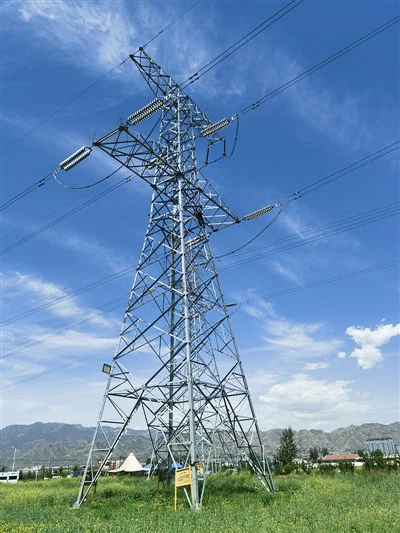
As a supplier of communication towers, I’m proud to be part of the solution to the communication challenges in underground areas. Our towers are designed to meet the specific needs of each project, ensuring that our customers have the best possible communication network.
Monitoring Tower If you’re looking for a reliable communication tower supplier for your underground project, I encourage you to contact us. Our team of experts will work with you to understand your requirements and provide you with a customized solution that meets your needs.
References
- [1] “Understanding Distributed Antenna Systems (DAS)” by Mobile Network Operators Association (MNOA)
- [2] “Fiber Optic Cables: The Backbone of Modern Communication” by Telecommunications Industry Association (TIA)
- [3] “5G Technology: Transforming the Future of Communication” by International Telecommunication Union (ITU)
Hebei Yifeng Steel Structure Co., Ltd.
As one of the most professional communication towers manufacturers and suppliers in China, we offer a wide range of products with superior quality. Please feel free to buy cost-efficient communication towers for sale here from our factory. Contact us for more details.
Address: Guangchuan Town Industrial Zone, Jing County, Hengshui City, Hebei Province
E-mail: hbyfgjg@163.com
WebSite: https://www.yf-powertowers.com/
