Hey everyone, let’s talk about something that’s totally unglamorous but straight-up makes modern industries run: steel flanges. As a Steel Flange supplier, I hear this question all the time—“What’s even the point of these round metal pieces that look like giant donuts with bolt holes?” Most folks see ’em on pipes, tanks, or heavy machinery and just zone out, but trust me, they’re the unsung heroes keeping operations safe, consistent, and not leaking all over the place. Let’s break it down like we’re chatting over a coffee, no boring textbook jargon (okay, maybe a tiny bit, but I’ll keep it real). Steel Flange
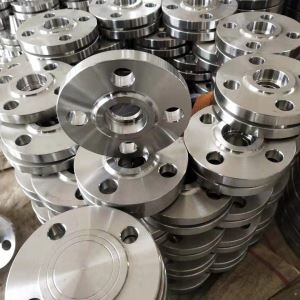
First off, let’s set the scene. If you’ve ever worked with pipes or pressure vessels, you know you can’t just weld every single joint together. Welding is permanent—if something breaks halfway, you’re either cutting all the welds or building a whole new line, which is a total nightmare for downtime. That’s where flanges come in. Their main gig is connecting two sections of pipe, a pipe to a valve, or a pipe to a piece of equipment like a tank. But it’s not just “stick two things together”—it’s a secure, reusable connection that’s way easier to maintain. Let’s be honest: when a pump fails or a pipe develops a leak, you don’t want to tear apart a permanent weld to fix it. Flanges let you unbolt ’em, swap out a part, and get back up and running in hours instead of days. That’s a game-changer for any industry where downtime costs big bucks—think oil and gas, chemical processing, water treatment, even food and beverage (yep, we make food-grade flanges for that too).
But wait, there’s way more to it than just connecting. Flanges act as a super tight seal too. Let’s say you’re moving stuff that’s not just water—we’re talking corrosive chemicals, high-pressure steam, or even flammable gases. If that stuff leaks, you’ve got a hazard on your hands. Flanges mate up with a gasket (that soft or rigid piece between them) to create a barrier that stops leaks. The bolts tighten the two flanges together so the gasket squishes just right—enough to block gaps, not so much that you warp the metal. That’s where the quality of the flange matters, too. As a supplier, I don’t cut corners on steel grade; I make sure our flanges handle whatever pressure or temperature your job throws at ’em. A cheap, flimsy flange might hold for a week, but a good steel one will last years through extreme heat, cold, and corrosion.
Speaking of pressure, steel flanges are designed to withstand brutal conditions. Different flange types are made for different pressure ratings—like 150, 300, 600 PSI, even higher for heavy-duty stuff. If you’re running a steam line at 300 degrees, you need a flange that won’t bend or crack under that heat. Or if you’re moving crude oil that’s full of sulfur, you need a flange made from corrosion-resistant steel so it doesn’t rust through. I’ve seen too many clients try to save a few bucks on generic flanges, only to end up with a leak that shuts down their entire plant. That’s why I always make sure to ask about their specific application—size, pressure, temp, what they’re moving—before suggesting a flange. No one-size-fits-all here.
Another big function? They make inspection and maintenance way simpler. Welded joints are hidden—you can’t check inside ’em for corrosion or cracks without digging into the pipe. But flanges are bolted on, so you can just unbolt ’em, pull the two sections apart, and do a quick check. For industries like water treatment, where pipes carry potable water, that’s non-negotiable—you have to make sure there’s no buildup or corrosion that could contaminate the water. Same with chemical plants: if a pipe has built-up residue that’s causing blockages, you can take the flange apart, clean it, and put it back together in no time. It saves so much time compared to other connection methods.
Wait, let’s not sleep on versatility. Steel flanges come in so many shapes and sizes—weld-neck, slip-on, blind, threaded, lap joint. Each does a slightly different job. Weld-neck flanges, for example, are great for high-pressure lines because the neck is welded to the pipe, so it’s super strong. Blind flanges, on the other hand, are solid—they cap off the end of a pipe line when you don’t need to connect anything else, but you can take ’em off later to access the line for maintenance. Slip-on flanges are easier to align if you’re working with pipes that don’t line up perfectly, which is perfect for on-site jobs where accuracy might be a little off. As a supplier, I stock all these types because every project has unique needs. I once worked with a small food processing plant that needed blind flanges to cap off a steam line for a new mixer—they needed to access the line quickly whenever they swapped out mixers, so slip-on wouldn’t work, and blind was exactly what they needed.
Now, let’s talk about durability. Steel is the go-to material for flanges for a reason—its strength, malleability, and resistance to wear and tear are unmatched. Sure, there are flanges made from plastic or other metals, but none of them can handle the same pressures or harsh environments as steel. A plastic flange might work for a low-pressure garden hose, but you’re not running a refinery with those. Steel flanges can take repeated tightening and loosening without warping, which is key for maintenance. I’ve had clients that use their flanges for decades, unbolting and re-bolting them hundreds of times, and they still work like new. That’s the value right there—something that doesn’t need replacing every couple of months.
But here’s the thing I always emphasize: flanges aren’t just a “part”—they’re a safety component. A failed flange can lead to leaks that cause fires, explosions, or toxic spills. I once got a call from a plant that had a leaky flange on a propane line—they had a small fire that could’ve been way worse if the flange had given out completely. That’s why I’m not just a supplier; I’m a resource. I help clients pick the right flange for their safety standards, make sure it meets industry certifications (like ASME or API), and even offer advice on installation. A lot of people underestimate how much a good flange contributes to a safe operation.

Now, if you’re reading this and you’re in the market for steel flanges—whether you’re a plant manager, a contractor, or a maintenance tech—let’s chat. I don’t do generic sales pitches; I want to hear about your specific project: what size pipe you’re working with, the pressure and temperature, what you’re moving through the line, and how often you’ll need to do maintenance. I can help you pick the right type of flange, the right steel grade, and make sure it’s something that’ll last for years. No matter if you need a single flange for a small repair or a bulk order for a new plant build, I’ve got you covered. Don’t waste time on cheap, low-quality flanges that’ll cause headaches down the line—hit me up, and let’s make sure your connections are solid, safe, and built to last.
Stainless Steel Flange References
- ASME B16.5, Pipe Flanges and Flanged Fittings: NPS 1/2 Through NPS 24, ASME International, 2020.
- "Steel Flanges: Design, Materials, and Applications," Global Steel Pipe and Fittings Association, 2022.
- Maintenance Best Practices for Process Piping Systems, Occupational Safety and Health Administration (OSHA), 2021.
Cangzhou Hangxin Flange Co., Ltd.
As one of the most professional steel flange manufacturers and suppliers in China, our products have good reputation in the market. Please feel free to buy high quality steel flange at competitive price from our factory. Good service and punctual delivery are available.
Address: DingZhuangZi Industrial Zone, Mengcun County, Cangzhou City, Hebei Province, China
E-mail: admin@yongxingflange.com
WebSite: https://www.hx-flangefitting.com/
