If you run a textile mill, you probably deal with tons of material handling, maintenance, and assembly line tasks that require reaching high shelves or the tops of production machines. And let’s be real—using a wobbly ladder for that stuff is just asking for trouble, right? That’s where scissor lifts come in, and as a scissor lift supplier, I’ve seen firsthand how these tools solve some of the biggest headaches textile folks deal with every single day. Scissor Lift
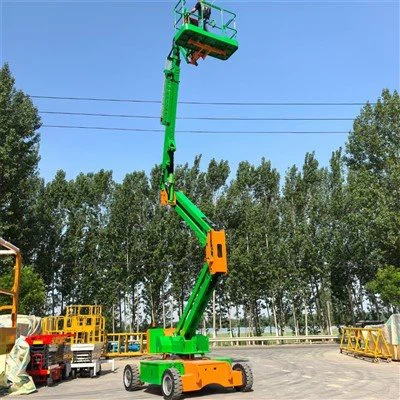
First off, let’s talk about the big one: storage and inventory management in textile warehouses. Textile operations carry huge amounts of raw materials—think bales of cotton, spools of synthetic thread, rolls of fabric, and finished goods like garments or upholstery material. Most warehouses stack these items high to save floor space, and the upper storage levels (usually 10 to 20 feet up) are way too tall for standard ladders or even step stools. Scissor lifts give workers a stable, elevated platform to safely load and unload these items without straining or risking falls. I recently worked with a small textile company in the South that was dealing with a 12% increase in minor fall incidents from workers climbing wobbly wooden ladders to grab bolt of fabric from the top racks. Once they swapped those ladders for electric scissor lifts, that number dropped to zero in six months. Not only is that safer, but it’s faster too—workers don’t have to climb up and down 10 times for one order, so they get more done in a shift.
Next up, maintenance of textile production equipment. If you’ve ever seen a textile mill, you know those big looms, spinning machines, and printing presses are enormous—some of them stand 15 feet tall, with critical parts up near the top. When something breaks, techs need to get up there to fix it, lubricate parts, or replace worn-out components. Before scissor lifts, maintenance teams would drag out scaffolding, which takes hours to set up and break down, or balance on a ladder while holding tools. Scissor lifts eliminate all that. They’re compact enough to maneuver around tight production aisles, they lock in place once extended (so no shifting mid-repair), and they have enough weight capacity to hold a tech, their tools, and even spare parts. I had another client, a fabric printing plant, that was losing $2,000 a day in downtime because setting up scaffolding for press repairs took 4 hours each time. After they started using a 19-foot electric scissor lift, repair time cut down to 45 minutes per job—total savings of over $50,000 in the first year. That’s the kind of ROI any business cares about.
Then there’s the finishing side of textile production—think drying, dyeing, and packaging. Dyeing machines often have vertical tanks or racks that need cleaning, and drying ovens can have lint buildup on the upper inner walls that’s a fire hazard if left unchecked. Packaging lines for large fabric rolls are usually set up on elevated stations so workers can wrap and label rolls without bending over constantly. Scissor lifts make all these tasks way easier. For example, lint buildup in drying ovens is super common in textile mills—if it catches fire, it can shut down the entire mill for days. Getting to the top of these ovens used to require special harnesses and slow scaffolding, but a scissor lift lets workers access every inch of the oven in minutes, so they can do monthly cleaning without any extra hassle. Same with packaging stations: elevating workers to a comfortable height cuts down on worker fatigue, which means fewer mistakes when labeling or wrapping, and less strain-related injuries like back pain.
Wait, let’s not forget assembly and installation of new equipment, too. When a textile mill is expanding or updating its production line, they have to lift heavy parts—like new loom heads, large fabric rollers, or control panels—into place. Scissor lifts are perfect for this because they can handle heavy loads (most industrial scissor lifts hold between 1,000 and 5,000 lbs) and fit through standard warehouse doors. Unlike cranes, which are big and require permits, scissor lifts are easy to move around the mill, even between different floors if the space has a freight elevator. I worked with a mill that was adding a new set of air-jet looms a couple years back; they tried renting a crane first, but it couldn’t fit through the mill’s main entrance. Swapping to a 26-foot rough-terrain scissor lift let them lift each loom’s top section directly into the production bay without any extra construction work to move the crane. That saved them over $10,000 in setup costs alone.
Now, let’s get real about why a lot of textile operators might overlook scissor lifts. Some think they’re too expensive, but when you compare the cost of downtime, injury claims, and lost inventory from falls, they actually pay for themselves really fast. Electric scissor lifts are even better for indoor textile use—they’re quiet, don’t emit fumes (so they’re safe around fabric and flammable materials), and they’re easy to maneuver on concrete mill floors. Rough-terrain models are great if you have outdoor storage yards or loading docks where you need to lift material onto trucks.
I’ve talked to a lot of mill managers who say, “We’ve always used ladders, why change?” But the stats don’t lie. OSHA reports that falls from ladders are one of the top causes of workplace injuries in manufacturing, and textile mills are no exception. Scissor lifts reduce that risk almost entirely because they have a wide, stable base and guardrails around the platform. Also, textile materials like lint can make floors slippery in spots, so a ladder is even more dangerous when it’s leaning on a wobbly, uneven surface. A scissor lift’s non-slip platform and steady base keep workers grounded no matter what the floor looks like that day.
Another underrated use: inventory checks for high storage. Instead of walking around the warehouse with a clipboard, trying to count boxes on top shelves, workers can hop in a scissor lift and do a full count in half the time. That’s huge for seasonal textile operations—like companies making holiday decor or summer apparel—when inventory counts need to be quick to keep up with demand. I had a client that does seasonal fabric for Halloween; during their peak season, they were doing weekly inventory checks that took 8 hours each. With a scissor lift, that time dropped to 2 hours, so their team could focus on getting orders out on time instead of counting stock.
If you’re still on the fence, think about this: most scissor lifts for textile use are low-maintenance. Electric models only need monthly checks of the battery and hydraulics, and they last 10+ years with proper care. No fancy parts, no complicated training—your existing maintenance team can learn to use them in a day, and OSHA even has simplified training for scissor lift operators that’s way cheaper than the training for forklifts or cranes.

Look, textile work is hard enough without adding avoidable injuries, downtime, or wasted time from using the wrong tools. Scissor lifts aren’t just a “nice to have”—they’re a game-changer for safety, efficiency, and bottom-line costs in any textile operation. If you’re tired of dealing with ladder-related issues, or you need help figuring out which scissor lift fits your mill’s specific needs, feel free to reach out to talk through your requirements. We can walk you through the options, help you calculate the ROI, and make sure you get a lift that works for your space, your materials, and your budget.
Articulated Boom Lift References
OSHA. (2022). Fall Protection in Manufacturing. Occupational Safety and Health Administration.
Textile Institute. (2021). Workplace Safety in Textile Warehousing and Production. The Textile Institute.
Industrial Rental & Supply Association. (2020). Scissor Lift Applications in Light Manufacturing. IRSA.
Shandong Zhongke Huali Machinery Co., Ltd.
As one of the most professional scissor lift manufacturers and suppliers in China, we also support customized service. We warmly welcome you to wholesale discount scissor lift in stock here from our factory. For price consultation, contact us.
Address: No. 2 Qubai Road, Qudi Street, Jiyang District, Jinan City, Shandong Province
E-mail: hlizhonggong@163.com
WebSite: https://www.hualiheavy.com/
