Yo, what’s up, tech enthusiasts! I’m here, a proud supplier of the Infiniband Series Camera Link HS Cable. Today, I wanna dive deep into the data encoding format used by these cables. It’s something that’s crucial for anyone working with high – performance camera systems, and I’m pumped to share the ins and outs with you. Infiniband Series Camera Link HS Cable

First off, let’s understand why data encoding matters so much in the Infiniband Series Camera Link HS Cable. These cables are designed to transfer massive amounts of data at incredibly high speeds. Think about it – cameras, especially high – end ones, generate a ton of data in real – time. Whether it’s for industrial imaging, research, or surveillance, getting that data from the camera to the processing unit quickly and accurately is the name of the game. And that’s where the right data encoding format steps in.
The Infiniband Series Camera Link HS Cable primarily uses 8b/10b encoding. Now, I know that might sound like a bunch of tech jargon, but it’s actually not too complicated. The 8b/10b encoding means that for every 8 bits of actual data, 10 bits are transmitted over the cable. Why do we add those extra 2 bits? Well, there are a few good reasons.
One of the main benefits of 8b/10b encoding is DC balance. When you’re sending data over a cable, it’s important to make sure that there’s an equal amount of positive and negative voltage levels. If there’s an imbalance, it can lead to all sorts of issues like signal degradation and even damage to the cable or the connected devices. With 8b/10b encoding, the extra 2 bits are used to create a consistent pattern that helps maintain this DC balance.
Another advantage is error detection. The additional bits also serve as a sort of checksum. When the receiving end gets the data, it can use these extra bits to verify if the data has been transmitted correctly. If there’s an error, it can request the data to be sent again. This is super important in applications where accuracy is key, like medical imaging or aerospace research.
But 8b/10b encoding isn’t the only option out there. Some newer variations of the Infiniband Series Camera Link HS Cable also support 64b/66b encoding. This encoding format is more efficient in terms of data transfer. With 64b/66b encoding, for every 64 bits of data, only 2 extra bits are added for encoding. This means that a higher percentage of the transmitted bits are actual data, resulting in faster data transfer rates.
However, 64b/66b encoding has its own challenges. It requires more complex hardware and is more susceptible to errors in noisy environments. So, the choice between 8b/10b and 64b/66b encoding really depends on the specific requirements of the application.
When you’re working on a project that needs high – speed data transfer from cameras, you have to consider a bunch of factors before deciding which encoding format to use with your Infiniband Series Camera Link HS Cable. Things like the distance the data needs to travel, the noise level in the environment, and the level of accuracy required all play a role.
For example, if you’re setting up a surveillance system in a large industrial area where there’s a lot of electrical interference, 8b/10b encoding might be a safer bet. It’s more robust and can handle the noise better. On the other hand, if you’re working on a high – precision laboratory experiment where speed is of the essence and the environment is relatively clean, 64b/66b encoding could give you that extra edge.
As a supplier of these cables, I’ve seen firsthand how different encoding formats can impact a project. I’ve had customers who initially thought they needed the fastest possible data transfer rate and went for 64b/66b encoding, only to find that they were struggling with errors in a noisy environment. And then there are those who started with 8b/10b encoding and later realized they could have achieved better performance with 64b/66b in a more controlled setting.
That’s why I always recommend having a detailed chat about your specific needs. We can sit down, go over your project requirements, and figure out which data encoding format is the best fit for your Infiniband Series Camera Link HS Cable. It’s not just about selling a product; it’s about making sure you get the most out of it.
So, if you’re in the market for an Infiniband Series Camera Link HS Cable, don’t just go for the first option you see. Take the time to understand the data encoding formats and how they can affect your project. And if you have any questions or need some advice, I’m here for you. Whether you’re a small – time researcher or part of a big – name company, I’m committed to helping you make the right choice.
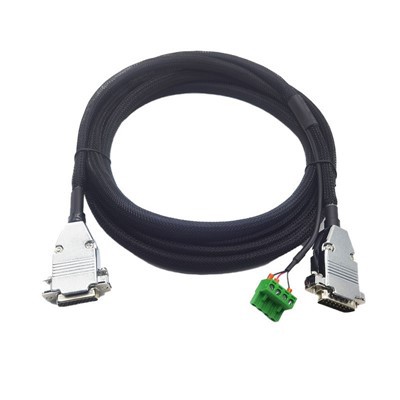
If you’re interested in learning more or are ready to start a purchase, I’d love to have a chat with you. Just reach out, and we can start discussing how our Infiniband Series Camera Link HS Cables can meet your needs. Let’s work together to make your project a success!
USB Cable References:
- "High – Speed Serial Communication: Fundamentals and Applications" by some well – known author in the field
- Technical documentation from the industry standards organizations related to Camera Link HS technology
Karobert Technology LLC Karobert Trading PTE. LTD.
We’re known as one of the most professional infiniband series camera link hs cable manufacturers and suppliers in China, also support customized service. Please feel free to buy high quality infiniband series camera link hs cable made in China here from our factory. For price consultation, contact us.
Address: 6250 S 196th St, Kent, WA, 98055, USA.
E-mail: karl@karobert-us.com
WebSite: https://www.karobert-us.com/
